The Trump Destiny: Reflections on Political Incentives and Polarization
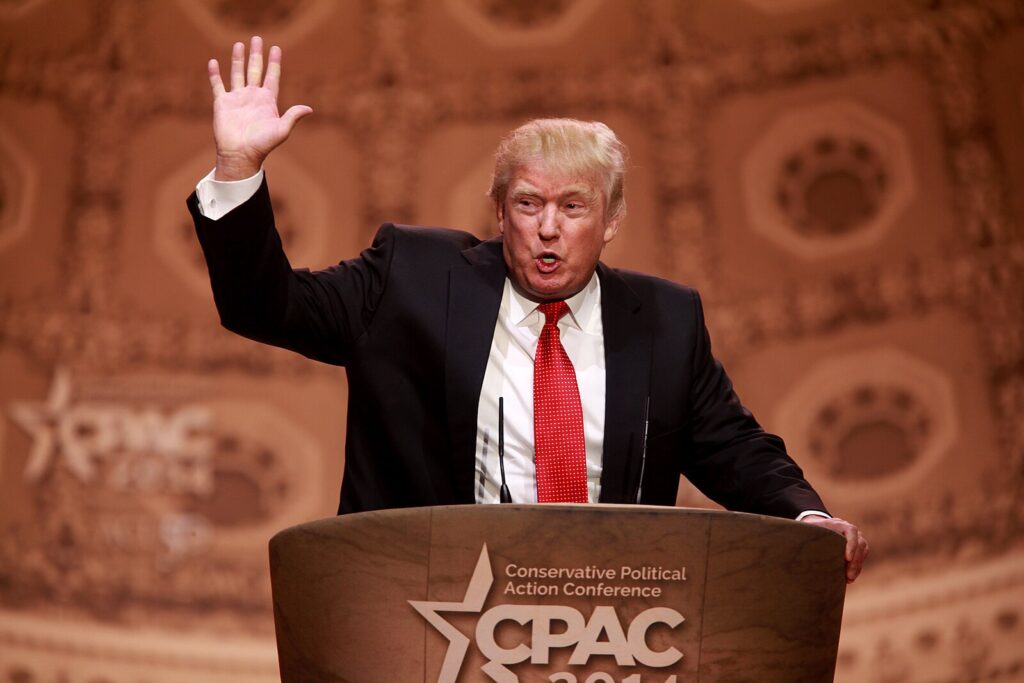
Looking back at pre-2016 politics, many of us miss the kindness and humility that the candidates used to show to their opponents during dialogue and debate. Whether it was Kennedy and Nixon, Ford and Carter, or Obama and Romney, you could often tell that, despite their differences, they wished the best for their opponent, at least during public debates. This contrasts hard with the modern state of politics. In September of 2025, during a memorial to the peacemaker and dialogue promoter Charlie Kirk, President Donald Trump made a statement about how he disagreed with Charlie on one thing: “I hate my opponent, and I don’t want the best for them.” This comment sobered many and caused me to think about where we are as a country. Many blame Donald Trump for this shift in public debate, but as it is with many things, blaming it all on one man is foolish. This article explains how a divisive figure like Donald Trump was destined to happen, and what we as a country can do to prevent another one
In 2016, to the dismay of pollsters, political analysts, and the entire establishment, the business-entertainment personality Donald J. Trump became the 45th president of the United States. Running on a populist base and a catchy slogan, “Make America Great Again,” Donald Trump was a political outsider and an underdog. His opponent was an established candidate, the wife of a US president, senator for 8 years, and Secretary of State, Hillary Clinton, the experts’ choice to win the election following her boss and friend, the beloved Barack Obama. Most likely, she would have won against an established republican candidate like Mitt Romney; unfortunately for her, Mitt Romney was not her opponent.
There are two main reasons for the animosity, ruthlessness, and general lack of respect that people show towards each other today. These two reasons are like a key and a lock that together open the doors for civic breakdown. Donald Trump was simply the first one to open the door and exploit it for political gain on a national level. His powerful friends, feisty personality, and appeal to a faulty sense of nostalgia made him the perfect man to do so. He calls for “Make America Great Again,” never specifying when it was great. He grants favors to his rich and powerful friends in exchange for loyalty and donations. For example, wealthy executive Joseph Schwartz received a full and unconditional pardon from President Trump after paying nearly a million dollars to lobbyists. He screams “fight, fight, fight” after almost being shot to death, then makes a fiery speech at the RNC three days later.3
In this analogy of key and lock, the lock happens to be the long-standing institutions and laws governing voting and its processes. The unique combination of first-past-the-post and the winner-takes-all systems, with the one-of-a-kind electoral college of the United States, creates polarizing incentives and voter apathy in those regions where competition is scarce. In 2024, 94% of all national campaign events were concentrated in just 7 swing states; Washington received none. A republican Washington voter told us in 2024 that he and his family no longer vote in the general election, “our votes do not count here, it’s deep blue.” This was shown in the data, with Washington state serving as an outlier in the 2024 election with the smallest gains by the republican party.
Winner-takes-all systems incentivize candidates to disregard demographics that are unlikely to vote for them. The Electoral College turns one national race into 50 state races of unequal value. In Wyoming, the average voter has more influence than the average voter in California. This is assuming their candidate wins in their state; if not, their vote has no impact on the national outcome. Combined, these two systems divide the country into voters that matter and voters that do not. States that matter and states that do not.
Donald Trump thrives on division; there are us, and there are they, the enemies. “I hate my opponent, and I don’t want the best for them.” Trump paints the democrats as “enemies from within” and the left-wing movement “Antifa” as a domestic terrorist organization. A media source that isn’t loyal to him is “fake news,” and the media are “enemies of the people.” A female reporter who asks a confrontational question is a “piggy” and someone with a “very low IQ.” If he feels his base is slipping out of his touch, he rallies them against the illegals, woke media, or, more recently, Somalis, whom he described as “garbage.” Donald Trump makes it very clear who people should hate, and his base appreciates that Donald Trump is taking a stance against the people they hate, not realizing why they hate them. Donald Trump can be seen talking about the “Great State of Michigan,” a key swing state, and the “failing, in shambles, California,” a blue stronghold.
But these laws have been in place since the 18th century, so why is the first populist arising only now? First, he isn’t; populists like Andrew Jackson had won before. Second, because the key to this lock is modern. Social media algorithms, short attention spans, and framing are all modern phenomena that exacerbate all these issues. The attention economy is where candidates are forced to compete for voters’ attention. In a national election, the candidate must be interesting to win. During the 2024 election, Donald Trump was the subject of many memes on TikTok and other social media services. President Trump’s quote, “They’re eating the dogs; they’re eating the cats,” became a viral meme, and people of all facets of the internet were describing it. Any publicity is good publicity, and much of the online engagement was missing the context necessary to understand how problematic this statement was. Trump thrived in debates; clips of the business mogul slamming candidates in debates went viral. In 2015, during the open Republican primary, Trump said regarding Rand Paul, “I never attacked him on his look and believe me there’s plenty of subject matter there – that I can tell you.“This is the shock value of the quote that made it viral, bringing attention to the candidate and engagement with voters. The qualitative result was President Trump’s victory in claiming the titles of the 45th and the 47th president of the United States of America.
Notably, the outlier that stressed the rule was the 2020 election, where the incumbent lost in a very close and disputed election. Trump’s opponent, Joseph R. Biden Jr., was an aging candidate with visibly less energy than Trump. Biden performed well in the debate in part because he would not let the incumbent president get on his nerves; he could not be ragebaited. Populist candidates run on promises, some unreachable. Communist candidates are often populist, and they promise a utopia where everyone has free money and no one must work for anything. They inevitably fail and only stay in power through authoritarianism. Trump was a different kind of populist; he made promises he could not or would not keep. When paired with the international pandemic disaster, voters were fed up with Trump, and many flipped to a candidate that represented the old nostalgic way of life, a sense of calm.
Donald Trump was not the reason our media landscape changed; he was a symptom of it. President Trump is 79 years old, and when he inevitably passes, the system is not going to suddenly revert to normal. If we want civil and peaceful debate once again, we need to change our system. The electoral college is outdated, designed at first because democracy at scale has not been tried yet, and the resources needed to have a popular vote are grand; we are not at that stage anymore, and we do not need the electoral college. First-past-the-post voting systems nearly always end up in two-party arrangements, where voters vote for the candidate they hate the least. A vote for a third party is a vote thrown away. A system like ranked-choice voting, on the other hand, incentivizes candidates to appeal to a wider category of voters and minimize radical rhetoric.
Leave a Reply